
Spray Foam Removal Process UK: What to Expect Day by Day
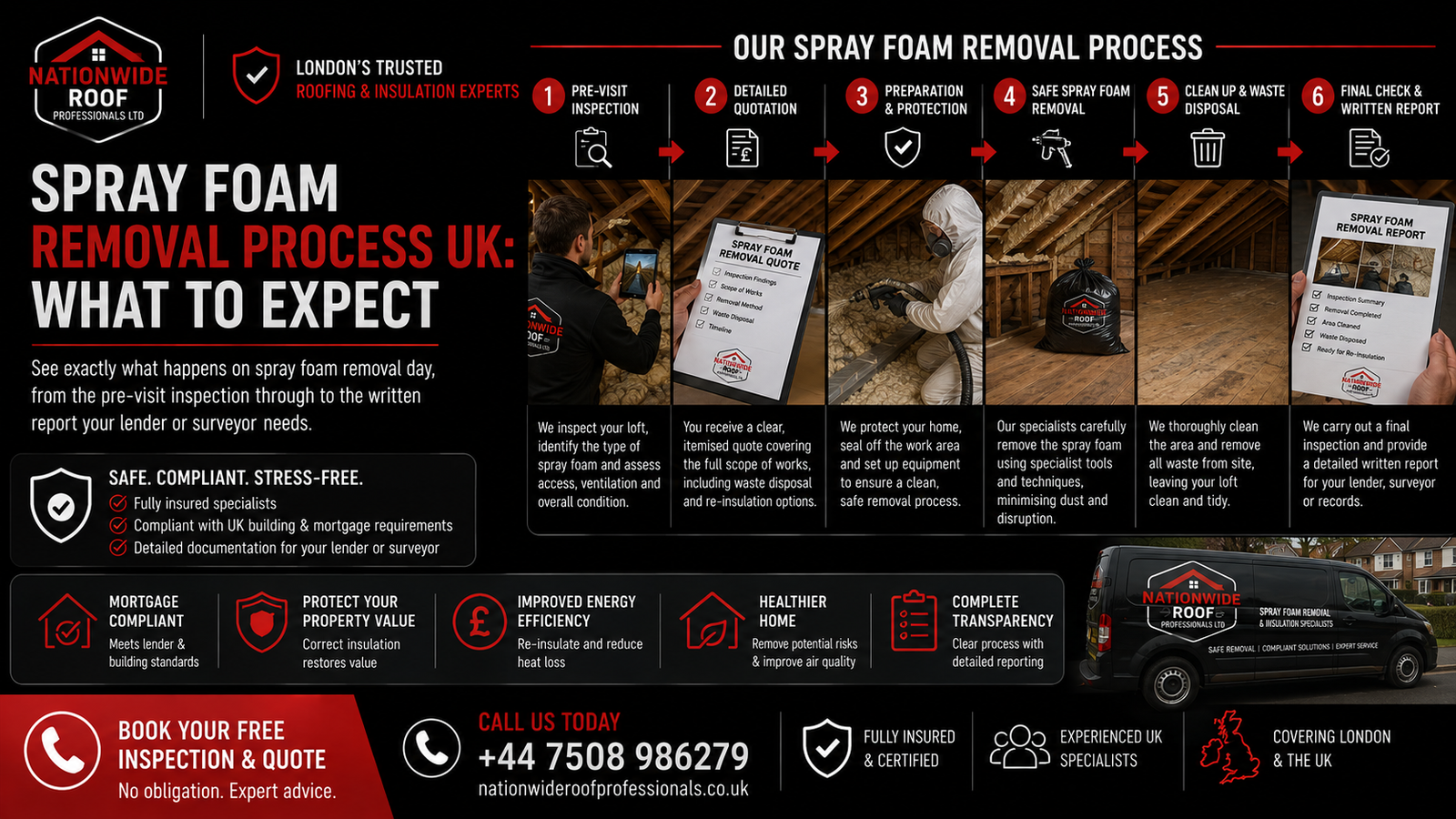
Booking a spray foam removal is straightforward once you know what actually happens on the day. Most of the uncertainty homeowners feel comes from not knowing what to expect, how long it takes, or what state the loft will be left in once the team packs up.
This guide walks through the full process we follow on every job, from the first inspection through to the written report you hand to your lender or buyer, so there are no surprises between booking and completion.
Before the Visit: Confirming the Foam Type
Every job starts with confirming whether you have open cell or closed cell foam, either through an in person inspection or a set of clear photographs sent by the homeowner. This step decides the removal method, the tools required and roughly how long the job will take, so we never quote or schedule a job without it.
If you are unsure which type is in your loft, our guide on identifying open cell and closed cell spray foam explains how to tell the two apart before we visit.
What to Do Before Removal Day
A short amount of preparation on your side makes the day run more smoothly. Clearing stored items from the loft hatch area, letting us know about any restricted access such as boarded flooring or a converted space, and making sure a family member or pet free route to the hatch is available all help the team get started without delay.
You do not need to be present for the entire job, but we ask that someone is reachable in case timber damage is found and needs discussing before we proceed with any repair work.
Day of Removal: Step by Step
Our team arrives with dust sheets and floor protection first, covering the route from your front door to the loft hatch before any tools come out. Protecting the rest of your home during the job is part of the standard process, not an optional extra.
Setting up. Access equipment is positioned and the loft space is assessed one final time against the original inspection, confirming nothing has changed since quoting.
Removing open cell foam. Technicians pull the foam away from the timber by hand in large sections, then clear residue from the wood grain with stiff wire brushes. A typical semi detached loft takes around four to six hours.
Removing closed cell foam. SDS drills and specialist scraping tools break the bond between the dense foam and the timber, working in smaller sections to protect the rafters and sarking felt underneath. This is a slower, more careful process and typically takes a full day or more on the same size property.
Bagging and disposal. All removed foam is bagged as it comes down and taken to a licensed waste facility, never left on site or put in a domestic bin.
Timber inspection. Once the foam is clear, the team inspects the exposed timbers for damp staining, decay or woodworm, photographing anything found before discussing it with you directly.
If Timber Damage Is Found
Finding some level of staining or minor decay is common, particularly where foam has trapped moisture for several years. When this happens, we photograph the damage, explain what we are seeing, and provide a separate repair quote before doing any further work, so nothing is added to your invoice without your agreement first.
After Removal: Your Written Report
Once the job is complete, you receive a written report confirming the foam type identified, the removal method used, and dated, timestamped photographs of the timbers before and after removal. This is the document a RICS surveyor or mortgage lender needs to reconsider a stalled application or lift a retention, so we build every report to that standard rather than a simple invoice with a few photos attached.
Reinsulating the Loft
A cleared loft has no thermal protection, so most homeowners choose to reinsulate soon after removal to avoid rising heating bills and condensation risk. Our guide to loft insulation options after spray foam removal covers SuperFoil, ThermaQuilt, AirTec LOS, EcoWool and cavity wall insulation, so you can plan this as part of the same visit if you want to.
How Long Does the Whole Process Take
Most residential lofts are completed in a single day for open cell foam, and one to two days for closed cell foam depending on roof size and access. Your written report is typically provided within a few working days of the removal being completed, giving you time to pass it on before a survey deadline.
Frequently Asked Questions
Do I need to move out of the house during removal? No. Removal work is contained to the loft space and access route, and you can remain in the property throughout, though pets and young children are best kept away from the loft hatch area while work is in progress.
What happens to the foam once it is removed? It is bagged on site and taken to a licensed waste facility. Spray foam cannot go in a standard domestic bin, so licensed disposal should always be included in your quote.
Will the team need to remove existing loft boarding? Only where boarding sits directly over foam covered areas that need access. If this applies to your loft, we confirm it during the initial inspection so it is reflected in your quote and timeline, not discovered on the day.
Can removal go ahead if I am not present? Yes, provided access has been arranged and someone is reachable by phone in case timber damage is found and needs a decision before we proceed.
How soon can I book removal once I accept a quote? Most jobs are scheduled within one to two weeks. If you are working to a property sale or remortgage deadline, mention this when booking so the job can be prioritised.
Knowing what happens on removal day, and what you should receive once it is finished, takes most of the uncertainty out of the process. If you are ready to book, or still confirming what type of foam you have, get in touch through our contact page for a free, fixed quote, or read more about our spray foam removal service. Before you book anyone.