Loft Boarding UK: What to Know Before You Board Your Loft
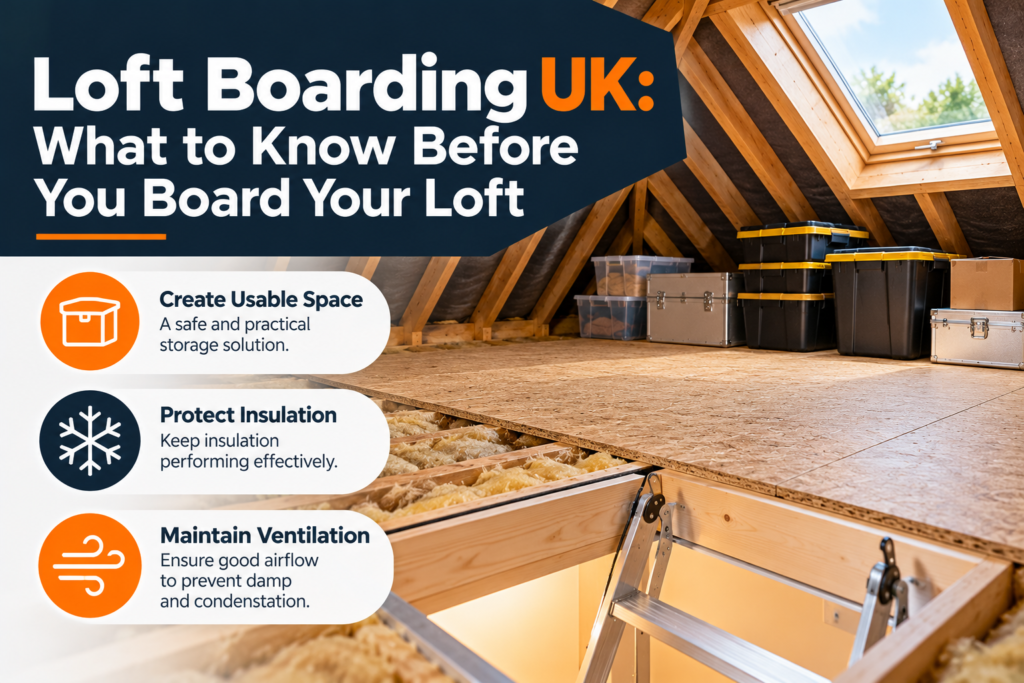
Loft boarding turns unused roof space into usable storage, but standard flat boarding laid directly onto insulation compresses it and reduces its performance. Raised boarding systems, fitted on legs above the insulation, preserve thermal performance and airflow while still providing a solid storage floor.
An empty loft is wasted space in most UK homes, and boarding it out for storage is one of the more popular home improvements precisely because it makes use of an area that would otherwise sit unused above the ceiling. Done properly, it adds genuinely useful storage without affecting the loft’s insulation or ventilation performance. Done without thought, it can quietly undo some of the benefit of a recent insulation upgrade.
This guide covers what loft boarding actually involves, the common mistakes to avoid, and how it interacts with the insulation and ventilation already in your roof space.
What Loft Boarding Involves
Loft boarding provides a solid, walkable floor across part or all of the loft space, typically made from moisture resistant chipboard or plywood panels. Once fitted, the boarded area can safely support the weight of stored boxes, furniture, and other household items that would otherwise have nowhere else to go.
A loft hatch upgrade and a fixed or fold-down ladder are often installed alongside boarding, since the standard hatch and loft ladder found in many homes are not always suitable for frequent, safe access once the loft becomes a regular storage area.
The Problem With Standard Flat Boarding
Most lofts already have some level of insulation laid across the floor, and the most common mistake in DIY loft boarding is laying boards directly on top of that insulation. This compresses the insulation beneath the weight of the boards and anything stored on them, significantly reducing its ability to trap air and resist heat loss, since insulation performance depends heavily on maintaining its full, uncompressed thickness.
Flat boarding laid this way also removes the small amount of natural airflow that would otherwise pass over the insulation surface, which can contribute to the kind of condensation problems covered in our loft ventilation guide, particularly in lofts where ventilation was already marginal before boarding was added.
Raised Loft Boarding Systems
The better solution, and the one used by most professional loft boarding installations, is a raised boarding system. This uses a network of legs or a supporting frame fitted above the existing insulation, allowing the boards to sit at a height that clears the insulation’s full depth rather than compressing it.
Raised systems preserve the loft’s thermal performance exactly as it was before boarding, since the insulation beneath is never squashed down, and they maintain the airflow path across the top of the insulation that supports overall loft ventilation. The specific leg height needed depends on how much insulation is already in the loft, since building regulations recommend a minimum insulation depth that boarding should not reduce.
Loft Boarding and Insulation Upgrades
If your loft insulation is below current recommended levels, it is often more sensible to top up the insulation to the correct depth before boarding, rather than boarding over insufficient insulation and needing to lift the boards again later to add more. Combining an insulation top-up with a raised boarding installation in a single project also means scaffolding, access, and disruption only need to happen once.
This is a common combined request, and it is worth discussing both needs together with whoever carries out the work, rather than treating loft boarding and loft insulation as entirely separate projects handled at different times by different people.
Loft Boarding and Roof Ventilation
As covered in detail in our loft ventilation and condensation guide, adequate airflow at the eaves and ridge is essential to keeping a loft space free from damp. Loft boarding should never extend into or block the ventilation gap at the eaves, where insulation is deliberately kept clear to allow air to enter the roof void.
A competent loft boarding installer will stop boarding short of the eaves for this reason, even if it means slightly less usable floor space at the very edges of the loft, since maintaining ventilation matters more than maximising every last square foot of storage area.
Weight Limits and Structural Considerations
Not every ceiling joist is designed to bear significant additional weight, since many loft floors were originally built only to support the ceiling below, not to double as a storage floor. Before boarding a large area or planning to store particularly heavy items, it is worth having the joists assessed to confirm they can safely take the additional load, particularly in older properties or where the loft has already been altered at some point.
In cases where existing joists are not adequate for the intended storage load, additional supporting joists can sometimes be installed as part of the boarding project, spreading the load more effectively across the loft structure.
Loft Hatches and Access
A loft used regularly for storage benefits from an upgraded hatch and a proper loft ladder rather than relying on a small original hatch and a step ladder balanced beneath it. Larger hatches make it considerably easier to move bulky items in and out, while a fixed or good quality fold-down ladder makes regular access safer, particularly if the loft will be used frequently rather than only once or twice a year.
It is worth checking that any hatch upgrade maintains a proper seal when closed, since gaps around an ill-fitting hatch can allow warm, moist air to escape into the loft space, contributing to the same condensation risks covered in our ventilation guide.
Choosing Loft Boarding Materials
Standard chipboard flooring panels are the most common choice for loft boarding, offering a reasonable balance of cost, strength, and ease of installation. Moisture resistant variants are generally preferred over standard chipboard, given that lofts experience more humidity fluctuation than a typical internal room, and are worth the modest additional cost for the added protection against swelling or degradation if condensation does occur.
Plywood is a more expensive alternative that offers similar strength with somewhat better dimensional stability in fluctuating humidity, and is sometimes preferred for lofts in properties with a known history of ventilation challenges, where minimising any additional moisture sensitivity is a sensible precaution.
Loft Boarding for Different Types of Storage
The way you intend to use your boarded loft affects some of the practical decisions worth making. If the space is mainly for lightweight, infrequently accessed items such as seasonal decorations or archived paperwork, standard raised boarding across the main central area of the loft, away from the eaves, is usually sufficient.
If the loft will be used for heavier or bulkier items, such as furniture or equipment, it is worth confirming both the boarding specification and the underlying joist capacity can handle the additional weight safely, since the requirements for occasional light storage differ meaningfully from those for regular, heavier use.
Lighting and Practical Considerations for a Boarded Loft
A loft used regularly for storage benefits considerably from proper lighting, rather than relying on a torch or the light from the hatch opening alone. A simple pull-cord or switched light fitting, installed by a qualified electrician, makes locating and retrieving stored items far easier and safer, particularly for a loft with limited headroom or an uneven boarded surface layout.
It is also worth planning a sensible walkway layout when boarding is installed, keeping a clear path to frequently accessed areas rather than boarding indiscriminately across the entire space, which can leave awkward gaps between stored items that are hard to navigate safely.
Combining Loft Boarding With Other Roof Work
Because boarding requires full access to the loft floor, it often makes sense to combine it with other planned roof space work, such as a ventilation upgrade covered in our loft ventilation guide, or an insulation top-up, rather than treating each as a separate visit. Doing this work in the correct sequence, addressing insulation and ventilation first and boarding last, ensures the boarding does not need to be lifted again shortly afterward to accommodate changes to the layers beneath it.
This sequencing also applies if you are separately considering cavity wall insulation or other energy efficiency upgrades to the property, since discussing the full scope of planned work with a single contractor can help identify the most efficient order and timing for everything, rather than each project happening independently.
Maintaining a Boarded Loft Over Time
Once boarding is installed, periodic checks help keep it performing well for years. Checking occasionally that stored items have not been placed directly against the eaves ventilation gap, particularly after items are moved around or new things are added, ensures airflow is not accidentally blocked over time even if the original installation left the correct clearance.
It is also worth checking the boarding itself periodically for any signs of sagging or movement, particularly in the years following installation, since this can indicate the underlying joists are under more load than anticipated and may benefit from additional support before any issue develops further.
Loft Boarding and Property Value
A properly boarded loft, with safe access and preserved insulation performance, is often viewed favourably by prospective buyers as useful, ready-made storage, distinct from a full loft conversion, which changes the property’s official living space, planning status, and valuation category. Being able to point to a well executed, raised boarding installation, rather than ad hoc boards laid directly on compressed insulation, can be a small but genuine positive during a future sale, particularly for buyers who ask directly about loft storage during viewings.
Loft Boarding Across London, Surrey and the South East
Loft boarding is particularly popular in London, where limited overall floor space in many terraced and semi-detached properties makes efficient use of the loft especially valuable. Larger South East properties often have bigger loft volumes, making raised boarding systems worthwhile for substantial storage capacity without sacrificing insulation performance. Nationwide Roof Professionals installs raised loft boarding systems across London, Surrey, and the South East, combined with insulation top-ups where needed.
Frequently Asked Questions
Can I board my loft myself?
Basic DIY boarding is possible for a competent homeowner, but getting the insulation depth, ventilation clearance, and joist loading right requires care. Many homeowners find it more straightforward to have a professional installation, particularly where insulation needs upgrading at the same time.
Does loft boarding affect my home’s energy efficiency?
Flat boarding laid directly on insulation can reduce energy efficiency by compressing the insulation. A raised boarding system avoids this issue entirely, preserving the loft’s full thermal performance.
How much of my loft can be boarded?
This depends on the loft’s structure and the load capacity of the joists. A full assessment can confirm how much of the available floor space can be safely boarded, and whether additional structural support is needed for full coverage.
Will loft boarding cause condensation problems?
Only if it blocks ventilation, either by extending into the eaves gap or by removing airflow above compressed insulation. A properly installed raised system avoids both issues.
Is a loft ladder necessary if I board my loft?
While not strictly required for boarding alone, a proper fixed or fold-down ladder makes regular access considerably safer and more practical than relying on a step ladder, particularly if the loft will be used frequently for storage.
Storage Without Sacrificing Performance
Loft boarding done correctly gives you valuable extra storage without undoing the benefit of your insulation or compromising ventilation. The difference between a good result and a problematic one usually comes down to whether the boarding sits above the insulation or compresses it.
Nationwide Roof Professionals installs raised loft boarding systems as part of our wider insulation services, ensuring your loft stays warm, dry, and genuinely useful. Request a free quote and we will assess your loft’s insulation, ventilation, and structure before recommending the right boarding approach.