
Spray Foam Removal: Is Your Insulation Quietly Destroying Your Roof?
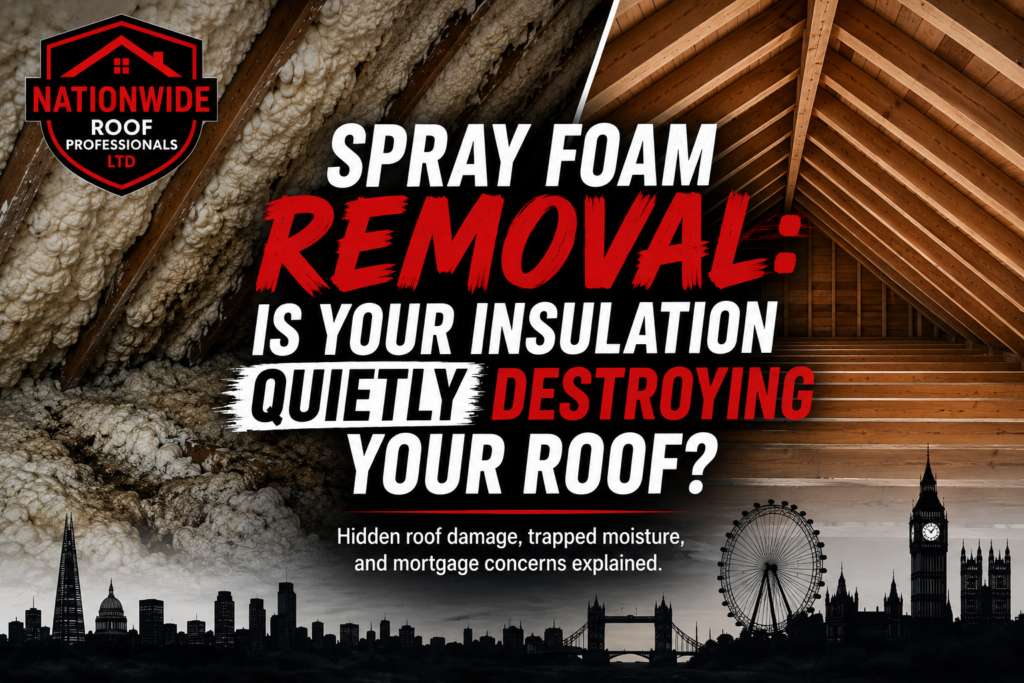
Spray Foam Removal: Is Your Insulation Quietly Destroying Your Roof? Spray foam insulation was sold as a fast fix for draughty lofts across the UK. For hundreds of thousands of homeowners, it has become one of the most expensive decisions they never made knowingly. Spray foam removal is now one of the fastest growing specialist services in the UK because the damage this product causes to roofs, timbers, and mortgage prospects is real, well documented, and getting worse the longer it is left in place. If your surveyor has flagged it, your lender has declined, or you simply have spray foam and want to understand the risks, this article gives you the full picture with no vague reassurances. What Spray Foam Insulation Actually Does to a Roof A roof is engineered to breathe, flex, and be inspected. Spray foam disables all three. When applied directly to the underside of roof tiles and felt, it bonds chemically to every surface it contacts. That bond is permanent and the damage it creates is progressive. Properly designed UK roofs allow moisture vapour to travel through the felt and escape at the eaves via soffit ventilation. Spray foam seals this pathway. Moisture accumulates inside the roof structure and the results are predictable: Problem What Happens Timeline Felt deterioration Sealed felt softens, splits and fails ahead of schedule 1 to 3 years Timber rot Rafters and purlins absorb trapped moisture and decay 2 to 5 years Mould growth Visible mould on timbers, sometimes entering living space 1 to 4 years Hidden structural damage Foam coats timbers so surveyors cannot assess condition Ongoing Mortgage problems Lenders decline or impose removal conditions Immediate on survey The last point is what most homeowners discover too late. By the time a lender refuses, the damage to the roof may already be significant. Open Cell vs Closed Cell Spray Foam: Why the Type Matters for Removal Not all spray foam is the same and the type present in your roof affects both the damage pattern and the spray foam removal process. Type Texture Main Risk Removal Difficulty Open cell Soft, spongy Absorbs moisture like a sponge, concentrates damp in timbers Moderate Closed cell Hard, rigid Bonds aggressively to felt and timber, often pulls felt on removal High Both types are flagged by RICS surveyors. Both cause mortgage problems. The distinction matters for scoping removal correctly, which is why we assess the foam type before quoting any project. See our dedicated spray foam removal service for full process details. Why Mortgage Lenders Refuse Properties with Spray Foam Halifax, Nationwide, Barclays, Santander and NatWest all have internal policies restricting or refusing lending on properties where spray foam is present. This is not niche lender caution. It is mainstream policy driven by RICS guidance issued from 2022 onwards. The RICS position is straightforward: spray foam makes proper structural inspection impossible. A surveyor who cannot inspect the roof timbers cannot certify the roof condition. A lender who receives a report with that caveat has no choice but to decline or impose conditions. The Property Care Association estimates up to 250,000 UK homes may be affected. For more background on how surveyors assess spray foam, the RICS guidance on spray foam insulation is worth reading alongside our service information. What Professional Spray Foam Removal Involves Professional spray foam removal is not a DIY job. The risks of attempting it without specialist tools and knowledge include damaging roof tiles, tearing felt, missing hidden rot, and failing to produce the documentation lenders require. Our process at Nationwide Roof Professionals: Step 1: Survey. We visit the property, identify the foam type, assess moisture levels and inspect all visible timbers. No commitment required at this stage. Step 2: Written scope. Fixed price quote and full written scope of works within 24 hours of the survey visit. Step 3: Removal. Specialist tools remove the foam without collateral damage where possible. For closed cell foam that has bonded deeply into felt, affected felt sections are replaced as part of the project. Step 4: Structural assessment. Every visible timber is inspected. Soft or compromised timbers are treated with fungicide and wood hardener. Replacement where necessary. Step 5: New insulation installed. Breathable replacement insulation is fitted. Options include EcoWool mineral wool, SuperFOIL multifoil, and PIR board depending on the roof configuration. Step 6: Completion certificate. A written certificate is issued confirming professional removal, structural assessment, treatment completed, and compliant insulation installed. Written specifically for RICS surveyors and mortgage lenders. How Much Does Spray Foam Removal Cost in the UK? Property Type Typical Removal Cost Includes 1 to 2 bedroom flat or terraced house 1,800 to 2,800 GBP Removal, timber assessment, basic treatment 3 bedroom semi detached house 2,500 to 4,000 GBP Removal, full timber assessment, treatment, new insulation 4 to 5 bedroom detached house 3,500 to 5,500 GBP Full removal, structural assessment, treatment, new insulation Roof replacement (if ignored) 12,000 to 25,000 GBP Full re-roof plus structural repairs The comparison in that last row is the clearest argument for acting promptly. Spray foam removal is a fraction of the cost of the structural repair bill it prevents. Spray Foam Removal in London and Surrey: Local Context Spray foam was aggressively marketed across London and the South East between 2015 and 2022. Victorian and Edwardian terraced properties in areas like Croydon, Sutton, Kingston, Guildford, Woking and across South London were particularly targeted because their older loft spaces made the product superficially appealing. The result is a high concentration of affected properties in exactly the areas where property values are highest and where mortgage requirements are most strictly applied. Our team is based in Surrey and works across London and the South East as our core territory, with national teams for properties elsewhere in the UK. If you are in Surrey, South London, or the wider South East and need an assessment, we aim to visit within 48 hours of your enquiry. Contact us via our contact page or call our
Spray Foam Mortgage Problems UK: How Removal Can Save Your Property Deal
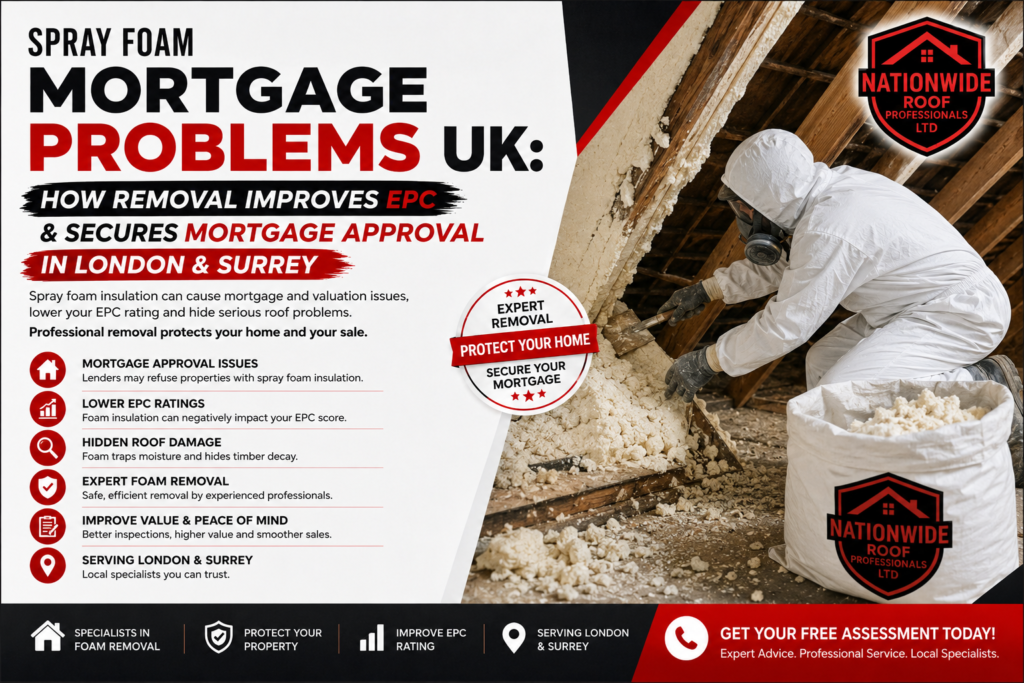
Spray Foam Mortgage Problems UK: How Removal Can Save Your Property Deal Across the UK, homeowners are increasingly facing mortgage refusals, reduced property valuations, and failed sales due to spray foam insulation. Although often marketed as an energy-efficient solution, poorly installed spray foam can trap moisture, hide roof defects, and block ventilation, creating serious concerns for surveyors and mortgage lenders. If your property survey has flagged insulation issues, spray foam removal may be essential to restore your home’s condition and secure mortgage approval. Why Spray Foam Causes Mortgage Problems in the UK Mortgage lenders are becoming more cautious when dealing with properties that contain spray foam insulation. Key Concerns Raised by Surveyors Hidden roof damage caused by trapped moisture Lack of proper ventilation in the roof structure Increased risk of timber rot and mould Inability to inspect roof condition accurately Because of these risks, many properties experience: Mortgage rejection Down valuation Buyer withdrawal This is why spray foam mortgage problems UK has become a rapidly growing concern for homeowners and buyers. How Spray Foam Removal Improves Mortgage Approval Professional spray foam removal directly addresses the issues raised by lenders and surveyors. Benefits of Removing Spray Foam Restores visibility of the roof structure Eliminates trapped moisture and damp Improves ventilation throughout the roof Provides certification for lenders and surveyors As a result, the property becomes mortgageable again, improving both buyer confidence and lending approval. The EPC Connection: Why It Matters Your Energy Performance Certificate (EPC) plays an important role in property value and mortgage decisions. Poorly installed spray foam insulation can: Reduce insulation effectiveness due to damp Increase heat loss over time Lower overall EPC ratings After removal and replacement with breathable insulation, homeowners often experience: Improved EPC ratings Reduced energy bills Better mortgage opportunities Real Case Study: Mortgage Approval Restored A homeowner in Surrey faced a mortgage refusal due to spray foam insulation identified during a survey. Inspection revealed early signs of timber decay and poor ventilation. After carrying out professional spray foam removal, treating the timber, and installing breathable insulation, the property successfully passed a re-survey and the mortgage was approved. Cost vs Long-Term Savings Item Average Cost Spray foam removal £1,800 – £5,500 Roof replacement (if ignored) £12,000 – £25,000 Additional Financial Benefits Reduced annual energy bills Increased property value Faster property sale or refinancing In many cases, spray foam removal becomes a cost-effective investment within a short period. Professional Spray Foam Removal Process 1. Roof Survey and Inspection A detailed assessment is carried out to evaluate moisture levels, insulation type, and roof condition. 2. Safe Preparation The working area is secured to prevent dust and protect the property. 3. Precision Foam Removal Specialist tools are used to remove the foam carefully without damaging the roof structure. 4. Timber Treatment and Certification Any affected areas are treated, and a completion report is provided for surveyors and lenders. Common Problems Solved by Spray Foam Removal Mortgage refusals and failed surveys Roof timber rot and structural concerns Damp, mould, and ventilation issues Reduced energy efficiency Why Professional Removal Is Essential Attempting to remove spray foam insulation without expertise can lead to: Damage to roof materials Incomplete removal Safety risks Professional services ensure safe, compliant, and effective results that protect your property. Why Choose Nationwide Roof Professionals Ltd Nationwide Roof Professionals Ltd provides expert spray foam removal services in London, Surrey, and the South East. Experienced with a wide range of UK roof types Fully trained and insured specialists Proven experience handling mortgage-related cases High standards of workmanship and customer service The focus is not only on removing insulation but on restoring the roof’s condition and ensuring long-term performance. Frequently Asked Questions Can spray foam insulation cause mortgage refusal? Yes, many lenders consider it a risk due to potential hidden damage and ventilation issues. Will removing spray foam improve EPC rating? In most cases, replacing it with breathable insulation improves energy performance. How long does spray foam removal take? Typically between 2 to 4 days depending on property size. Is spray foam always a problem? Not always, but in many UK homes it is unsuitable and can lead to long-term issues. Do I need proof after removal? Yes, certification helps surveyors and lenders approve the property. Conclusion: Protect Your Property and Mortgage If your property is affected by spray foam insulation, taking action early can prevent costly damage and avoid mortgage complications. Professional spray foam removal improves your roof’s condition, enhances energy efficiency, and restores your property’s market value. Contact Nationwide Roof Professionals Ltd today to arrange a professional assessment and take the first step toward securing your mortgage and protecting your home.