
Spray Foam Mortgage Problems UK: Fix It Fast
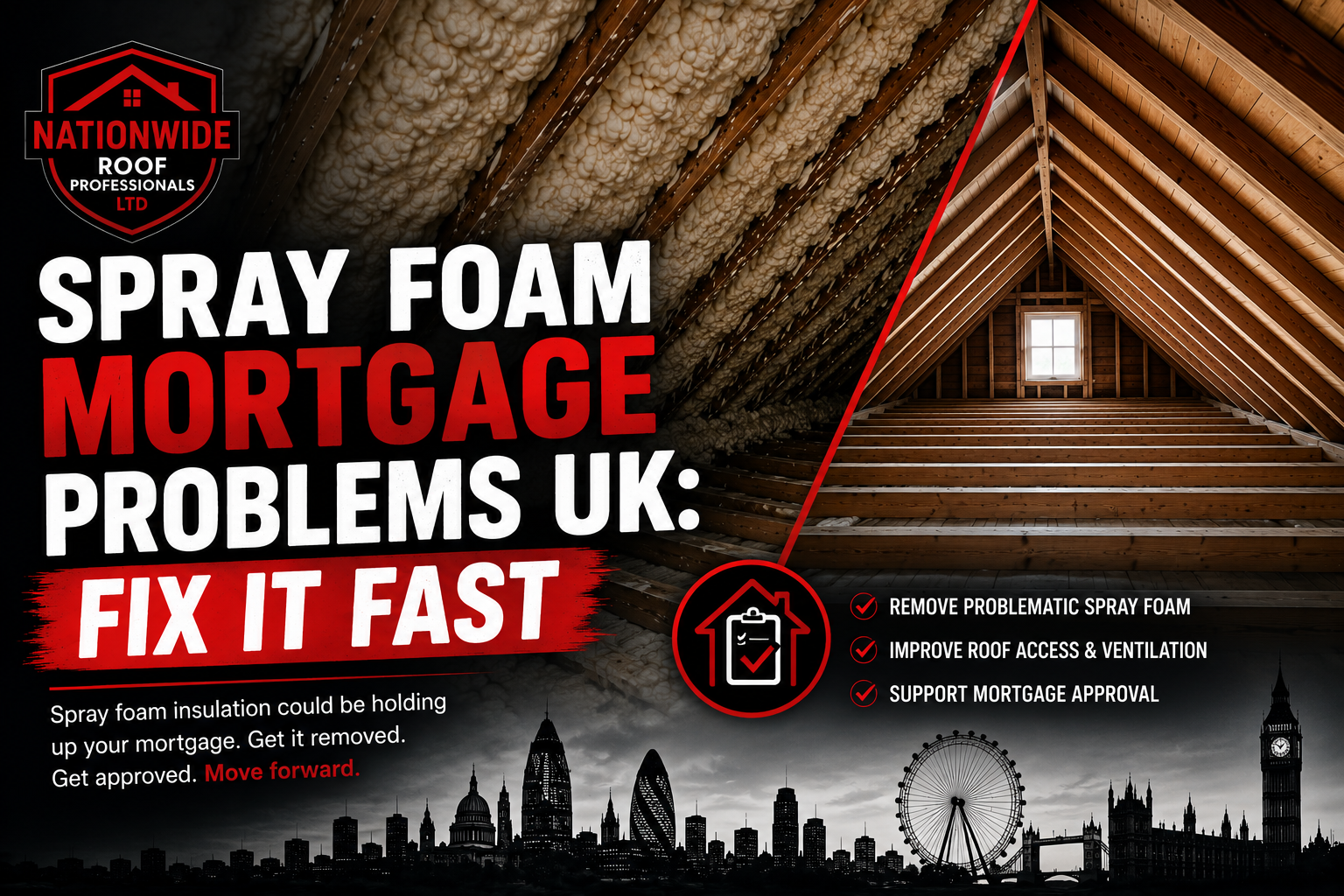
Spray foam mortgage problems in the UK are now affecting thousands of transactions every year. If your mortgage application has been declined because of spray foam insulation, or if a surveyor has flagged it in a property you are buying or selling, you need accurate information fast. This article explains precisely what causes the refusal, which lenders are affected, and the one action that resolves it in most cases.
Why Spray Foam Causes Mortgage Problems in the UK
Mortgage lenders rely on surveyors to certify the structural condition of a property before lending. When spray foam insulation is present in the roof structure, RICS surveyors are unable to properly inspect the underlying timbers, felt or structural members. The foam physically conceals the condition of the roof.
A surveyor who cannot inspect cannot certify. A lender who receives an inconclusive report has no choice but to decline or impose conditions. Since RICS formalised its guidance on spray foam in 2022, this has become routine across all major UK lenders.
| Lender | Position on Spray Foam | Solution Accepted |
| Halifax | Declines or conditions lending | Professional removal plus completion certificate |
| Nationwide | Declines on standard products | Professional removal plus completion certificate |
| Barclays | Requires specialist valuation or declines | Professional removal plus completion certificate |
| Santander | Declines in most cases | Professional removal plus completion certificate |
| NatWest | Flags and conditions | Professional removal plus completion certificate |
| Most high street lenders | Treat as standard risk flag | Completion certificate from specialist contractor |
The pattern is consistent. Removal followed by a professional completion certificate is the standard accepted route back to mortgageability. Finding a specialist lender who ignores the foam is a workaround, not a solution. The problem will resurface when the buyer sells.
What the Completion Certificate Does
Not all removal contractors issue a completion certificate that lenders accept. The certificate must confirm specific things to satisfy RICS surveyors and mainstream lenders:
Foam type identified and professionally removed. The contractor must confirm the foam type, the removal method used, and that all foam material has been cleared.
Full structural inspection carried out. Every visible timber assessed for moisture, rot, and structural integrity.
Required treatment completed. Fungicide treatment, wood hardener, and timber replacement where identified.
Compliant insulation installed. Breathable replacement insulation fitted to UK building regulation standards, with depth and product specified.
Contractor details and insurance. Fully insured specialist contractor details included for lender verification.
Our certificates have an established track record of clearing mortgage conditions on re-survey. We have produced completion documentation accepted by Halifax, Nationwide, Santander and others. View the full process on our spray foam removal service page.
The EPC Connection: Spray Foam and Energy Performance
There is a direct link between spray foam problems and EPC ratings that most homeowners are not aware of. Spray foam that has absorbed moisture, partially delaminated, or was installed at insufficient depth performs significantly worse thermally than its nominal specification suggests.
This means your EPC may be artificially depressed by the degraded foam. After professional removal and replacement with quality breathable insulation such as EcoWool or SuperFOIL, EPC ratings typically improve by one to two full bands.
The government’s EPC guidance confirms that insulation upgrades are among the most direct and measurable ways to improve a rating. For properties requiring compliance for rental or sale, the insulation upgrade that comes with removal is a significant added benefit.
How Quickly Can Mortgage Problems Be Resolved?
| Stage | Typical Timeline |
| Initial contact and survey booking | Same day or next working day |
| Free survey visit | Within 48 hours of booking (London and Surrey) |
| Written quote issued | Within 24 hours of survey |
| Removal and insulation work | 2 to 4 days on site |
| Completion certificate issued | Same day as work completion |
| Mortgage resubmission | Next working day |
| Lender decision on resubmission | Varies by lender, typically 5 to 15 working days |
For most residential transactions, the entire removal and certification process completes well within a standard conveyancing timeline. Acting at the first sign of a mortgage problem rather than waiting for the second or third lender decline significantly reduces overall transaction delay.
Spray Foam Mortgage Problems in London and Surrey
London and Surrey are among the most heavily affected areas in the UK. The concentration of Victorian and Edwardian terraced and semi detached housing across areas including Croydon, Sutton, Kingston, Guildford, Woking, Epsom and across South London means a disproportionate number of properties were targeted by spray foam marketing campaigns between 2015 and 2022.
Property values in these areas are high. Mortgage requirements are closely scrutinised. Buyers are well advised and their solicitors will push hard on spray foam issues. This is not the area to hope a buyer will overlook a surveyor flag.
Our base in Surrey means we understand the specific property types and lender landscape in this market. We cover the full London and South East territory and operate nationally for properties elsewhere in the UK.
Sellers vs Buyers: Who Pays for Spray Foam Removal?
This is a common negotiation point in transactions where spray foam is discovered after an offer is accepted. There is no universal rule but the practical outcomes are well established:
Seller arranges removal before listing. Clean transaction, full asking price maintained, no renegotiation, fastest path to completion.
Seller arranges removal as a completion condition. Transaction proceeds but timeline extends. Buyer retains ability to renegotiate if removal reveals additional damage.
Buyer accepts responsibility with price reduction. Buyers who take on the uncertainty price it aggressively. Reductions of 5,000 to 15,000 GBP are common even when actual removal costs are 2,000 to 4,000 GBP. The buyer compensates for risk, not just cost.
Sellers who invest in removal before listing consistently achieve better net outcomes than those who leave it to buyers. Contact Nationwide Roof Professionals to discuss your timeline and get a free survey booked.
Frequently Asked Questions about Spray Foam Mortgage Problems
Does spray foam always cause mortgage refusal?
In the current UK lending environment, yes in the vast majority of cases. There is no mainstream lender that actively welcomes spray foam. Most flag, condition, or refuse on standard products.
Can I get a mortgage on a house with spray foam?
With specialist lenders, sometimes. However specialist products typically carry higher rates and the problem will resurface when you come to sell. Professional removal resolves the issue permanently across all mainstream lenders.
My spray foam was installed under a government scheme. Who is responsible?
Some schemes have compensation routes for mis-sold insulation products. This is a legal question separate from the removal process. Independent legal advice from a solicitor familiar with consumer protection claims is recommended alongside sorting the removal.
How do I get started?
Contact us via our spray foam removal page or through our contact page. We will book a free survey, usually within 48 hours, and provide a written quote within 24 hours of the visit.