
Why Spray Foam Insulation May Be Damaging Your Roof and How to Fix It
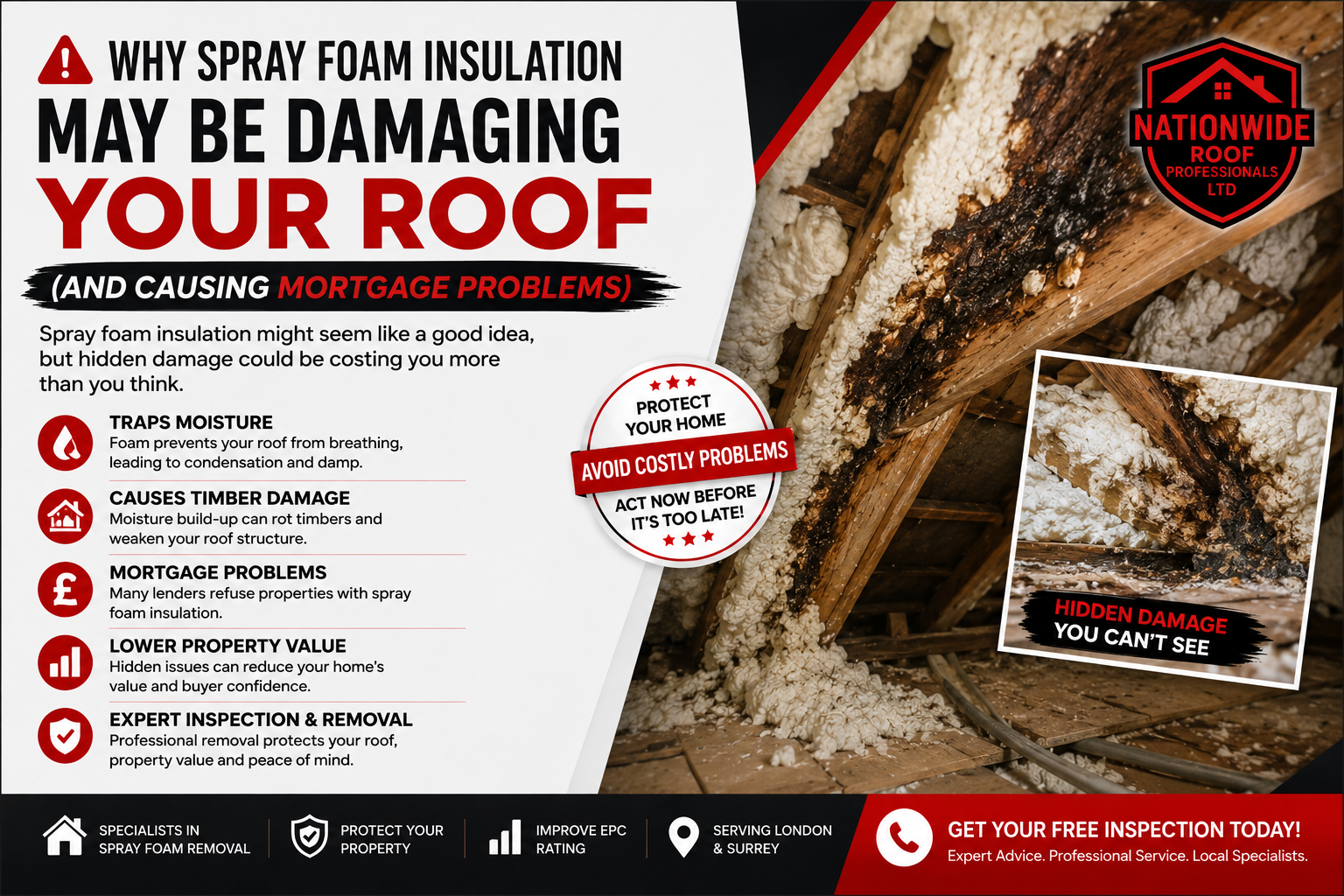
Across the UK, homeowners are increasingly facing mortgage refusals, failed property surveys, and costly roof repairs due to spray foam insulation.
While it is often marketed as an energy-efficient solution, improperly installed spray foam can trap moisture, block ventilation, and hide structural damage. These issues not only affect your roof but can also prevent you from selling or refinancing your property.
If your survey has flagged insulation concerns or you are dealing with damp or ventilation issues, spray foam removal may be essential to protect your home and restore its value.
What Is Spray Foam Removal and Why Is It Important for Property Owners?
Definition of Spray Foam Removal
Spray foam removal is the professional process of extracting bonded insulation from roof timbers, tiles, and felt. Unlike traditional insulation, spray foam expands and adheres tightly, which can restrict airflow and trap moisture inside the roof structure.
This can lead to:
- Timber rot and structural weakening
- Mould growth and poor air quality
- Roof felt deterioration
- Reduced energy efficiency
Removing the foam restores proper ventilation and allows the roof to function as intended.
Real-World Example
In areas such as Croydon, Guildford, and Kingston, many homeowners have installed spray foam to improve insulation. However, surveyors frequently identify problems such as trapped moisture and hidden timber decay.
In several cases, properties have required full spray foam removal before they could pass a mortgage survey or proceed with a sale.
Why Spray Foam Insulation Causes Mortgage Problems in the UK
A major concern today is spray foam mortgage problems UK, as lenders are becoming more cautious.
Key Issues Identified by Surveyors and Lenders
- Hidden roof damage that cannot be inspected
- Lack of ventilation, increasing long-term risk
- Moisture retention, leading to rot and mould
- Uncertainty in roof condition, affecting property valuation
As a result, homeowners often face:
- Mortgage refusal
- Down valuation
- Delayed or cancelled property sales
Professional spray foam removal is often required before lenders will approve the property.
How Spray Foam Removal Benefits Your Home or Business
Benefits for Homeowners, Sellers, and Businesses
- Prevents long-term structural damage
- Restores proper airflow and ventilation
- Eliminates damp and mould issues
- Improves indoor air quality
- Supports successful property sales and refinancing
Long-Term Financial Impact and ROI
| Item | Typical Cost |
| Spray foam removal | £1,800 – £5,500 |
| Roof replacement (if ignored) | £12,000 – £25,000 |
Additional benefits include:
- Improved EPC ratings
- Reduced energy bills
- Increased property value
In most cases, spray foam removal becomes a cost-effective investment within 12–24 months.
The Process of Spray Foam Removal and Loft Insulation
Step-by-Step Guide
- Assessment
A full inspection identifies moisture levels, foam condition, and any structural concerns. - Removal
Specialist tools are used to safely remove the foam without damaging the roof. - Cleaning and Preparation
All surfaces are cleaned and prepared for new insulation. - Reinstallation
Breathable, energy-efficient insulation is installed to restore performance.
Why Professional Installation Is Important
DIY removal can:
- Damage roof tiles and felt
- Leave hidden moisture untreated
- Increase long-term repair costs
Professional services ensure safe, effective removal that complies with UK standards.
Materials Used in Spray Foam Removal and Their Benefits
Quality and Durability
Modern insulation materials used after removal are designed to:
- Improve thermal efficiency
- Allow natural ventilation
- Provide long-term durability
Environmental and Safety Considerations
Eco-friendly insulation options reduce environmental impact while maintaining high performance and safety standards.
Common Issues Solved by Spray Foam Removal
- Damp and condensation problems
- Mould growth and poor air quality
- Roof timber decay
- Reduced energy efficiency
- Failed surveys and mortgage issues
Pricing and Cost Considerations for Spray Foam Removal
Expected Pricing
Costs depend on:
- Property size and roof access
- Thickness and type of foam
- Level of damage present
Typical pricing ranges between £1,800 and £5,500.
How Spray Foam Removal Pays for Itself
- Prevents expensive structural repairs
- Improves energy efficiency
- Increases property value
- Helps secure mortgage approval
It is not just a repair it is a long-term investment in your property.
Why Choose Nationwide Roof Professionals Ltd for Spray Foam Removal
Trust, Experience, and Authority
- Experienced roofing and insulation specialists
- Proven track record across London & Surrey
- Fully trained and insured professionals
- High standards of workmanship and safety
Local Expertise in London & Surrey
With extensive experience in areas such as Croydon, Guildford, Sutton, and Woking, the team understands local property types and roofing challenges.
This ensures solutions that are both effective and compliant with regional standards.
Frequently Asked Questions
Can spray foam insulation cause mortgage refusal?
Yes. Many UK lenders flag spray foam due to hidden damage risks and ventilation issues.
Do surveyors flag spray foam insulation?
In most cases, yes—especially when it prevents proper roof inspection.
Will spray foam removal improve EPC rating?
Yes, particularly when replaced with breathable insulation.
How long does spray foam removal take?
Typically between 2 and 4 days depending on the property.
Is spray foam removal worth it?
Yes. It protects your roof, improves efficiency, and helps secure mortgage approval.
Conclusion and Next Steps
If your home has spray foam insulation, addressing the issue early can prevent serious structural damage and financial loss.
Professional spray foam removal restores your roof’s condition, improves energy efficiency, and ensures your property remains safe, valuable, and mortgage-ready.
Contact Nationwide Roof Professionals Ltd today to arrange a consultation and receive a free quote for expert spray foam removal services in London and Surrey.